Understanding Clipper Guard Lengths: Chart and Style Guide for Men in Pasadena and San Gabriel
A guard chart is a useful starting point, but a finished taper or fade depends on blending and head shape as much as the number itself.
What Are Clipper Guard Sizes?
Distinctive and Bold
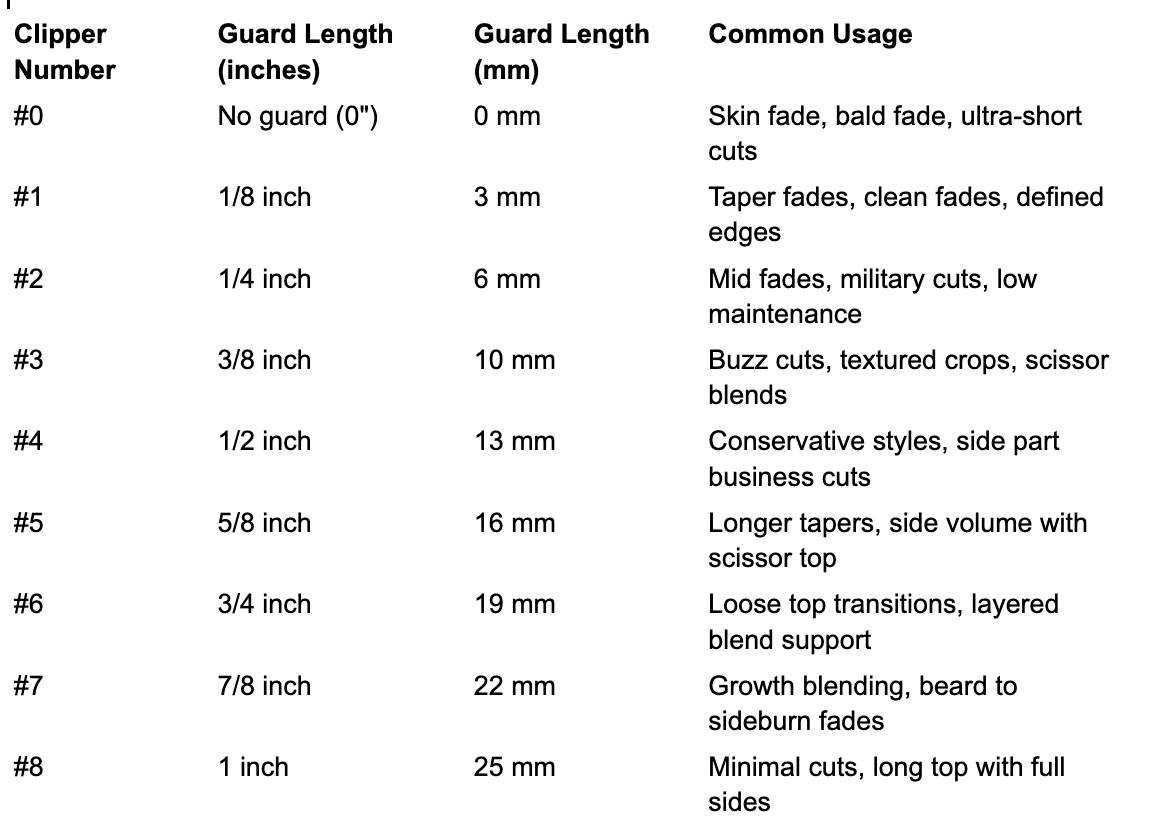
Clipper guard sizes, also known as haircut numbers, indicate how short a clipper will cut your hair. These numbers are printed on the guards that attach to the clipper blades and serve as a reference for hair length in either inches or millimeters. At B SIDE U Hair, we use clipper guards to create precise, clean fades and tapered styles. Whether you're getting a #0 skin fade or a #4 business taper, these numbers help us communicate length clearly—especially important in a luxury grooming experience where precision matters.
Clipper Guard Length Chart: From #0 to #8
Understanding clipper guard sizes helps you speak the same language as your barber. Here's a visual breakdown of clipper numbers, their guard length, and what they’re commonly used for:
How We Use Clipper Sizes at B SIDE U Hair
Distinctive and Bold
While clipper guards define the length, what makes the cut elite is how the guards are used. At B SIDE U Hair in Pasadena and San Gabriel, our barbers use guard numbers to create seamless fades, blended transitions, and highly personalized contours. Here’s how we typically approach it:
• Use #0 or #1 for high-impact fades and skin tapers
• Blend #2–#3 for softer side transitions and tight crops
• Use #4–#6 for business cuts, executive tapers, or fuller styles
• Adjust guard angles to match head shape, crown density, and neckline curve
We often work between guard numbers—using half guards and lever adjustments—to achieve finer fade gradients, especially important for Asian hair textures that require extra care to blend cleanly.
Common Haircut Styles and Their Clipper Lengths
Understanding what clipper size to ask for can help you get the look you want. Below are some common styles with matching guard recommendations:
Each style depends on more than just the guard—we use a combination of clipper control, angle pressure, and scissor finishing to sculpt a look that flatters your face and grows out well.
Clipper Size vs. Scissor Cut: What’s the Difference?
• Clippers: Ideal for short, uniform styles, fades, tapers, and buzz cuts. They’re fast, clean, and precise.
• Scissors: Better for longer styles, layered looks, and top shaping. Used to create natural movement and volume.
At B SIDE U, we often combine clipper and scissor techniques, especially for clients who want structured fades but a softer top that flows. The key is balance—one tool controls the shape, the other refines the detail.
Local Insight: What Clients in Pasadena & San Gabriel Prefer
In the San Gabriel Valley, haircut preferences often vary by client type and career. Here’s what we see most often:
At B SIDE U Hair, we understand these preferences and always guide clients to the guard sizes and style structures that work best for their routine and profession.
Clipper-Based Haircuts from the B SIDE U Hair Gallery
Clean Fade with Defined Top
Low Skin Fade with Pompadour Finish
Business Side Part with Tapered Sides
How to Ask for the Right Guard Length
Distinctive and Bold
Here’s how to describe your ideal haircut at B SIDE U Hair—even if you’re not familiar with all the terms:
• “I want a clean fade on the sides, maybe a #1 to #2, and some length left on top to style.”
• “Can we do a low taper with a #3 and scissors on top for a natural flow?”
• “Something like a Korean two-block with short sides—maybe a #2 guard?”
Don’t worry—you don’t need to know every number. Our stylists will consult with you and translate your vision into the right guard lengths, taper levels, and blending approach.
Final Word: Clipper Sizes Are Tools—We Bring the Technique
Clipper numbers give you a starting point, but your finished haircut depends on how those numbers are blended, shaped, and detailed. At B SIDE U Hair in Pasadena and San Gabriel, we use clipper sizes with precision—and combine them with professional scissor techniques to create haircuts that match your identity and lifestyle. Whether you need a clean taper for the office, a trendy fade for going out, or just want to understand the difference between a #2 and #3—we’re here to guide you, cut by cut.