Textured Mullet with a Temple Taper
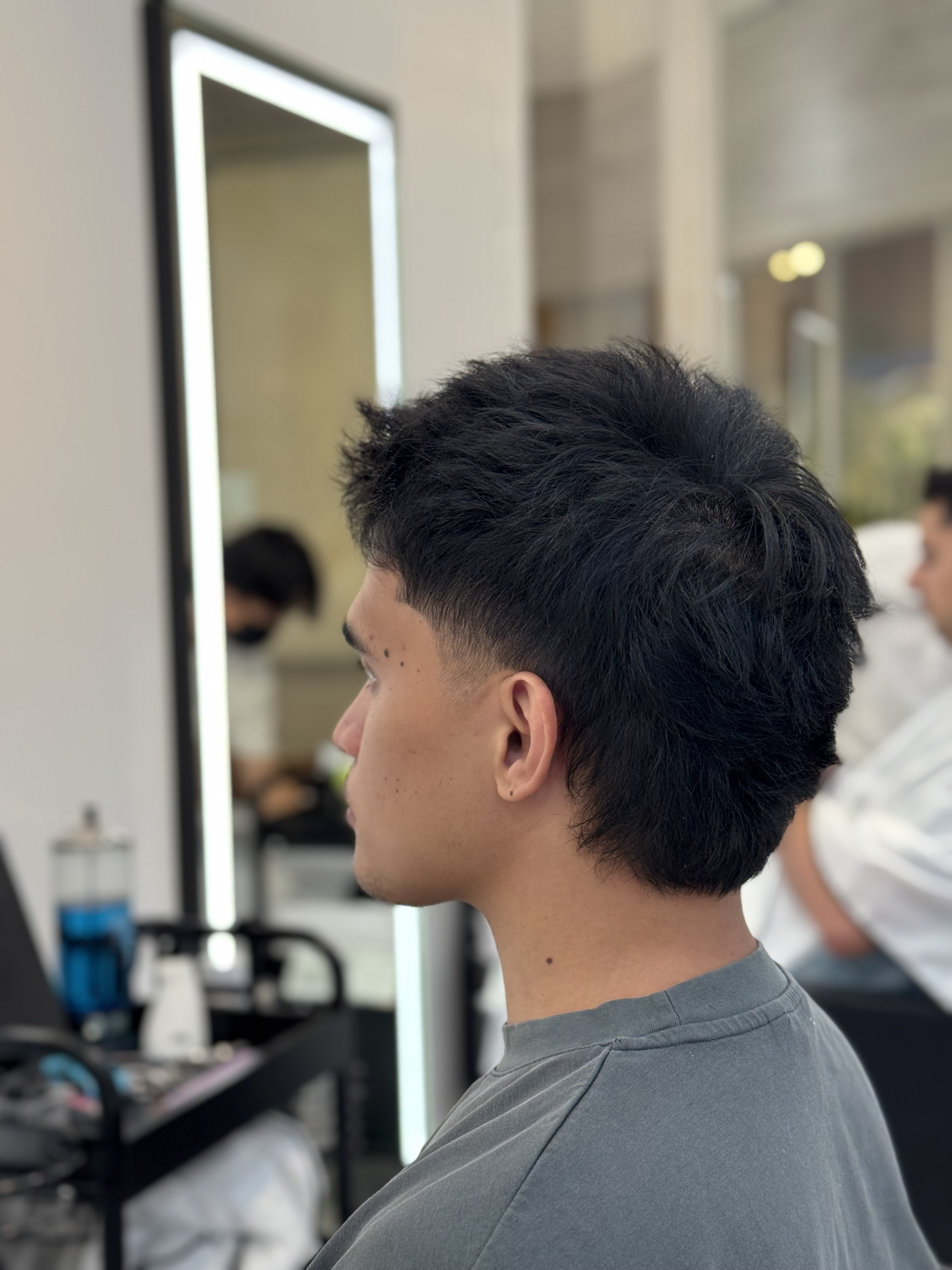
A close temple, a textured top and a fuller back give this haircut its shape. The temple taper sharpens the front of the side profile, while the longer hair behind the ear carries the mullet through to the nape. If you like this look, the most useful starting point is the photo itself: show your stylist which parts of the silhouette you want to keep.
What makes this haircut work
The taper is concentrated near the temple and sideburn. In the visible side view, that short area transitions into darker, longer hair above it. It creates a clean focal point at the front without taking the entire side and back equally short.
The top has visible lift and separated texture rather than a flat, slick finish. Its volume continues toward the crown, connecting visually with the fuller back. Behind the ear, the hair remains substantial and extends down toward the nape. That retained length is central to the mullet shape.
Those three details belong together. Asking only for a temple taper leaves the top and back open to interpretation. For a result closer to this reference, discuss the taper, the textured top and the back length as separate parts of the same haircut.
Keep the taper localized
Point to the temple area in the photo and ask where the shortest section will begin and end on your own head. Explain whether you want the visible contrast shown here or a slightly softer transition.
Also point to the hair behind the ear. If you want to preserve this silhouette, make it clear that the back should retain length and fullness. Agree on the boundary of the taper before cutting starts so that cleaning up the side does not remove the part of the shape you came for.
Decide how much texture you want on top
“Textured” can mean different things in a consultation. In this reference, the top looks lifted and broken into small sections, with a relatively compact front and more fullness toward the crown. Tell your stylist whether you like that amount of height or would prefer the top to sit closer to your head.
Talk about how your hair behaves after washing, especially at the crown and along the sides. Ask how much daily styling your version would need. The photo shows the finished appearance; it does not establish which cutting technique, tool or product was used to create it.
Plan the back from more than one angle
The fuller back gives this cut its mullet character, but this side view does not show the complete neckline or opposite side. Before settling on the shape, discuss how long you want the hair at the nape and how much width you want behind the ears.
A shorter, more compact back and a longer, more pronounced back can both be built around a temple taper, but they create different silhouettes. Bring a rear-view reference if the neckline is important to you. Ask to check the back in a mirror so you can agree on the outline rather than relying on the haircut name alone.
What to say at your appointment
“I’d like a textured mullet with a temple taper, similar to this photo. Keep the taper concentrated at the temple and sideburn, with fullness behind the ear and length through the back. I like the lifted texture on top. Can we decide the top length, taper boundary and neckline before you start?”
Then add what matters most to your routine: how much time you spend styling, how you normally wear the front and how long you want the back to grow. These details help turn the reference into a clear plan for your hair.
Keep the shape as it grows
At your next visit, separate the clean-up from the overall length. If you are growing the mullet longer, say so before the back is trimmed. You can discuss refreshing the temple area while preserving the length you want to keep.
For styling, ask your stylist to demonstrate how to bring out the top’s texture without flattening the back. A practical demonstration is more useful than guessing a product from the photo. Before leaving, check the front, side and back together: the goal is a shape you like from every angle.
Bring this reference to B SIDE U Pasadena
Save the photo and bring it to your consultation. Point out the localized temple taper, the texture on top and the fuller mullet back, then discuss how those details should be adjusted for your hair and preferred finish.