Texture, Shape, and Finish: Three Different Details in a Hair Photo
A haircut photo can catch your attention before you know exactly what you like about it. You might notice a full crown, a close neckline, or waves moving away from the forehead. Those details belong to different parts of the result. Separating texture, shape, and finish makes a reference easier to understand without needing to memorize a style name.
Start with the shape
Shape is the overall outline of the hair. Look at how much room it takes up above the head, around the ears, and behind the crown. You can notice the outline before studying individual strands.
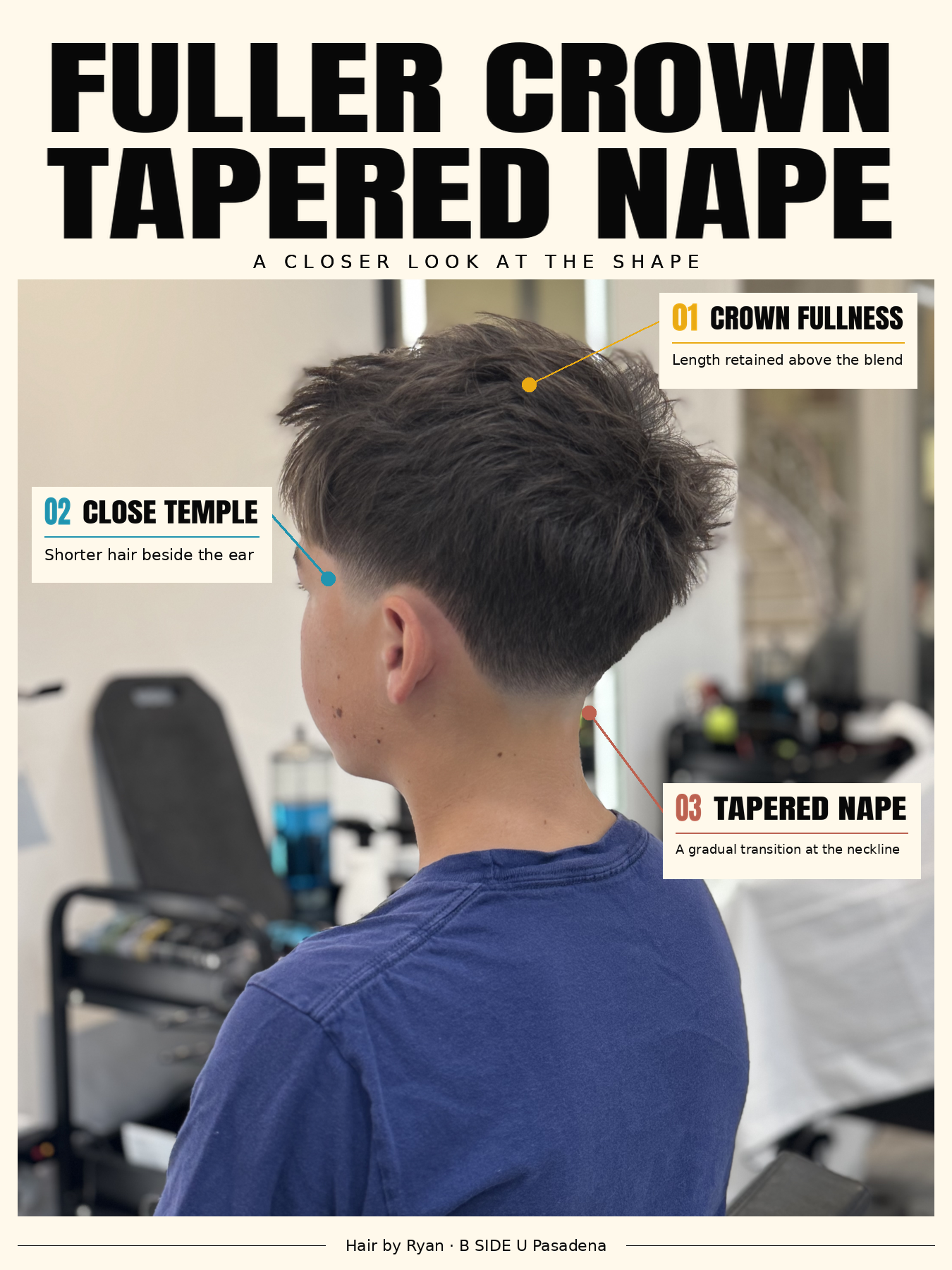
In the Pasadena work shown here, the crown has a full, rounded outline while the hair becomes much shorter at the nape. The contrast between those areas is visible from the rear-side angle. The picture does not show enough of the front to tell you how a fringe would sit across the forehead.
That is a useful limit to recognize. A reference can be helpful for one part of a haircut without supplying a complete plan for every angle.
Then look at the texture
Texture, as it appears in a photograph, is the pattern within that outline: separated pieces, broad bends, tighter curls, or smoother sections.
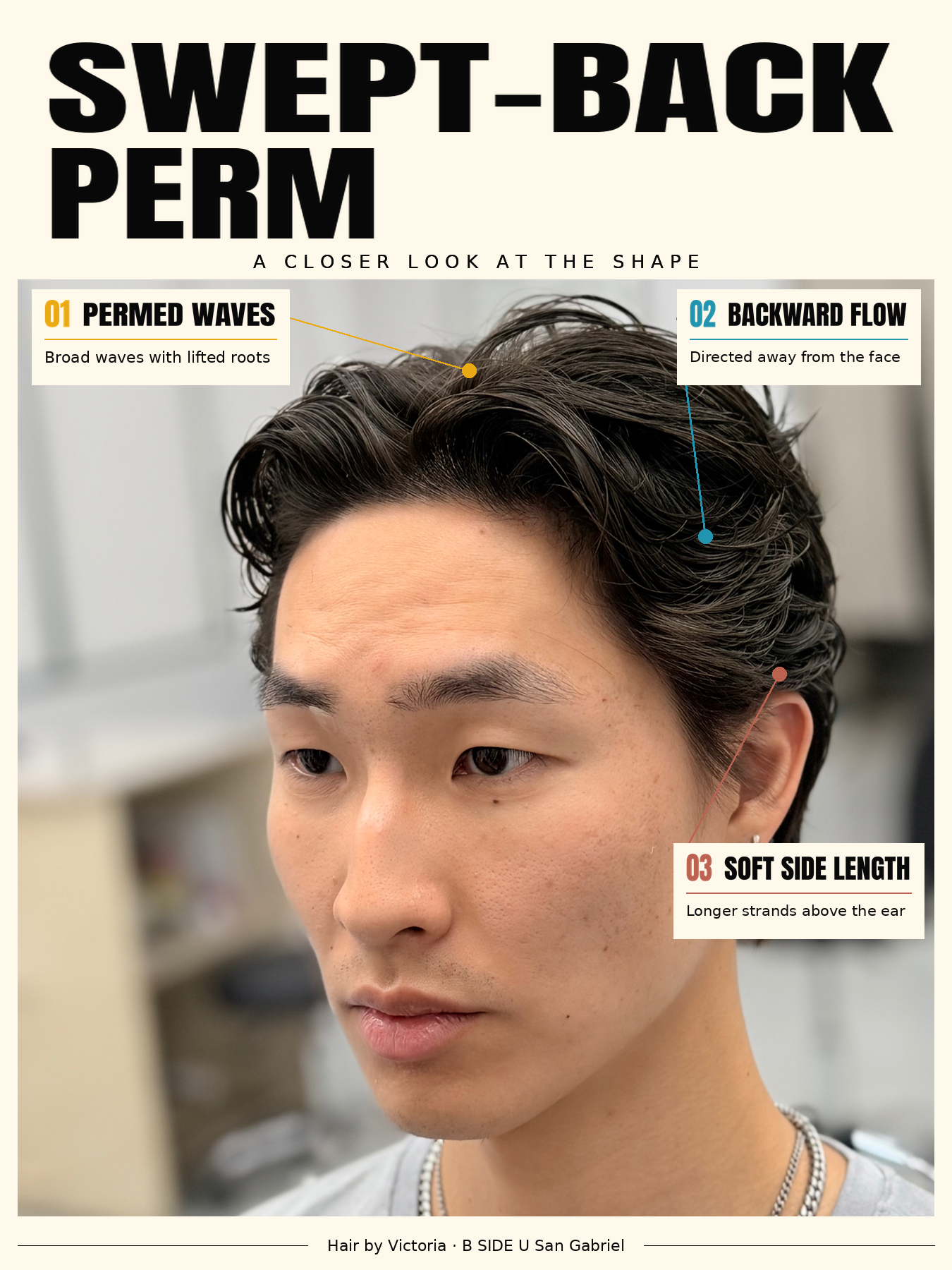
The San Gabriel perm shown here has broad waves directed back from an open forehead. The sides also curve back, with fullness remaining behind the ear. Those visible details explain the image more precisely than simply calling the hair “textured.”
This San Gabriel example is a perm. For other references without a confirmed service description, a photograph alone may not establish whether the movement came from a perm, natural texture, or styling. Ask about the process rather than assuming every similar-looking wave requires the same service.
Notice the finish separately
Finish is how the hair is presented at that moment. You may be drawn to a loose, separated appearance or a more organized sweep. Light also changes how shiny or matte a photograph appears.
Avoid choosing a product solely because the reference looks glossy, or assuming that a soft-looking result uses no product. A photo usually does not tell you what was applied, how much was used, or how the hair was dried. Ask for those details if you want to understand the styling routine behind a result.
Choose the detail you want to carry over
Try identifying one priority from each category. For shape, you might like a full upper section with a closer neckline. For texture, you might prefer broad movement rather than tightly defined curls. For finish, you might want a relaxed arrangement rather than every strand directed into place.
These preferences do not have to come from the same photograph. If you bring more than one reference, explain which detail you mean in each. Your stylist can then discuss how those ideas work together with your hair and routine.
A useful reference is specific about what you see and honest about what you cannot see. That leaves room for a clear conversation about the cut, the service, and the styling needed to approach the result you have in mind.