Middle Part or Forward Fringe? Choose the Front Shape Before Your Next Haircut
Start with the front shape
Two hairstyles can keep length through the back and still feel very different around the face. The front is a useful place to begin: do you want hair to open away from your forehead, or fall forward over it? These two B SIDE U photos show that contrast without relying on a haircut name to explain everything.
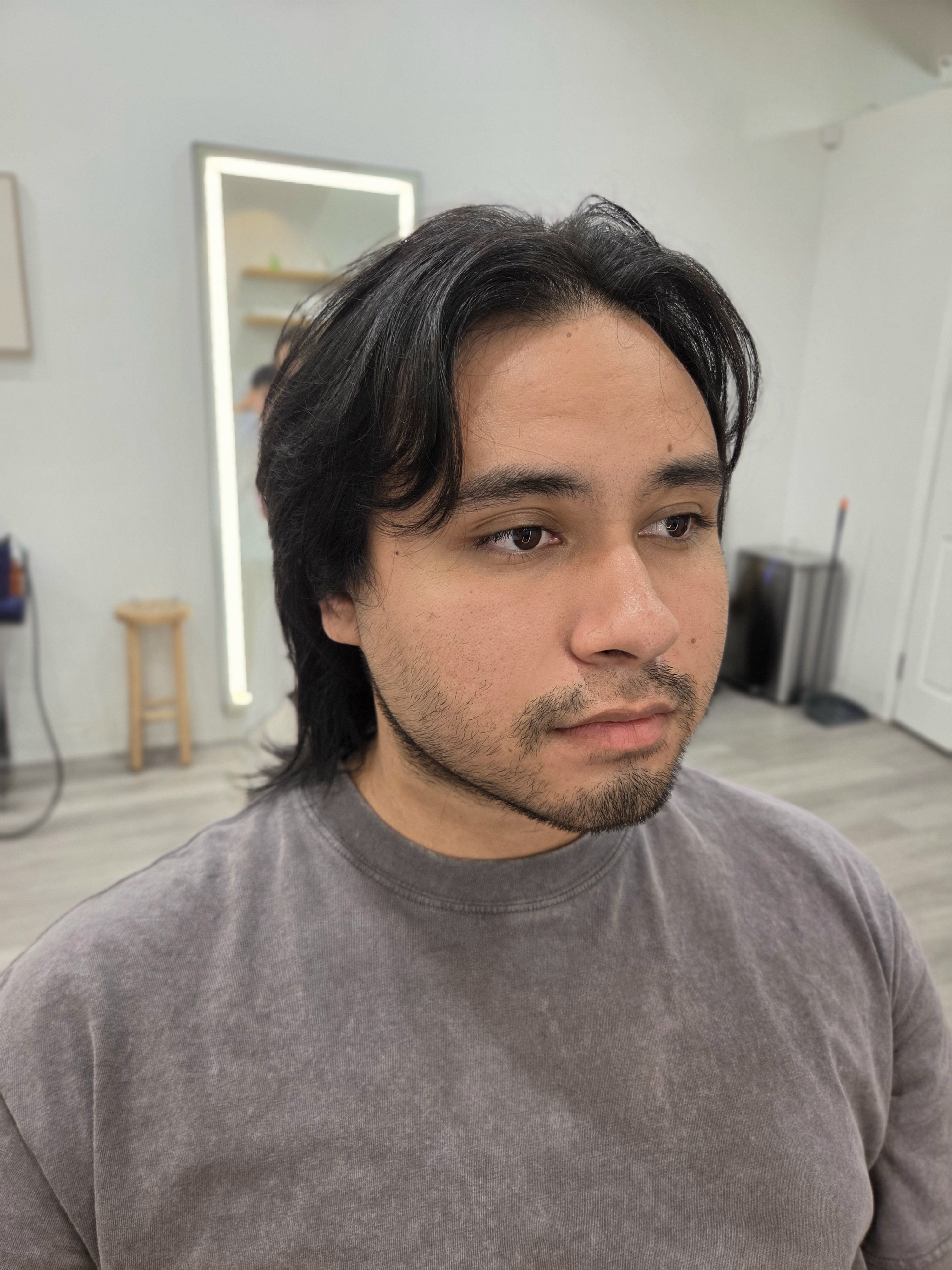
The middle part in this photo
In the first photo, the hair separates near the center. The front sections bend outward beside the brows, leaving the middle of the forehead visible. Length remains around the ears and down the nape, while the curved sections keep the outline from looking like one solid block.
If this is the detail you like, point to the front opening and the way the sides fall. You can ask: "I want the front to separate around the center, with enough length to sweep away from my face. Please keep this amount of length at the sides and back." Show where those lengths should end on you rather than relying only on the words "middle part."
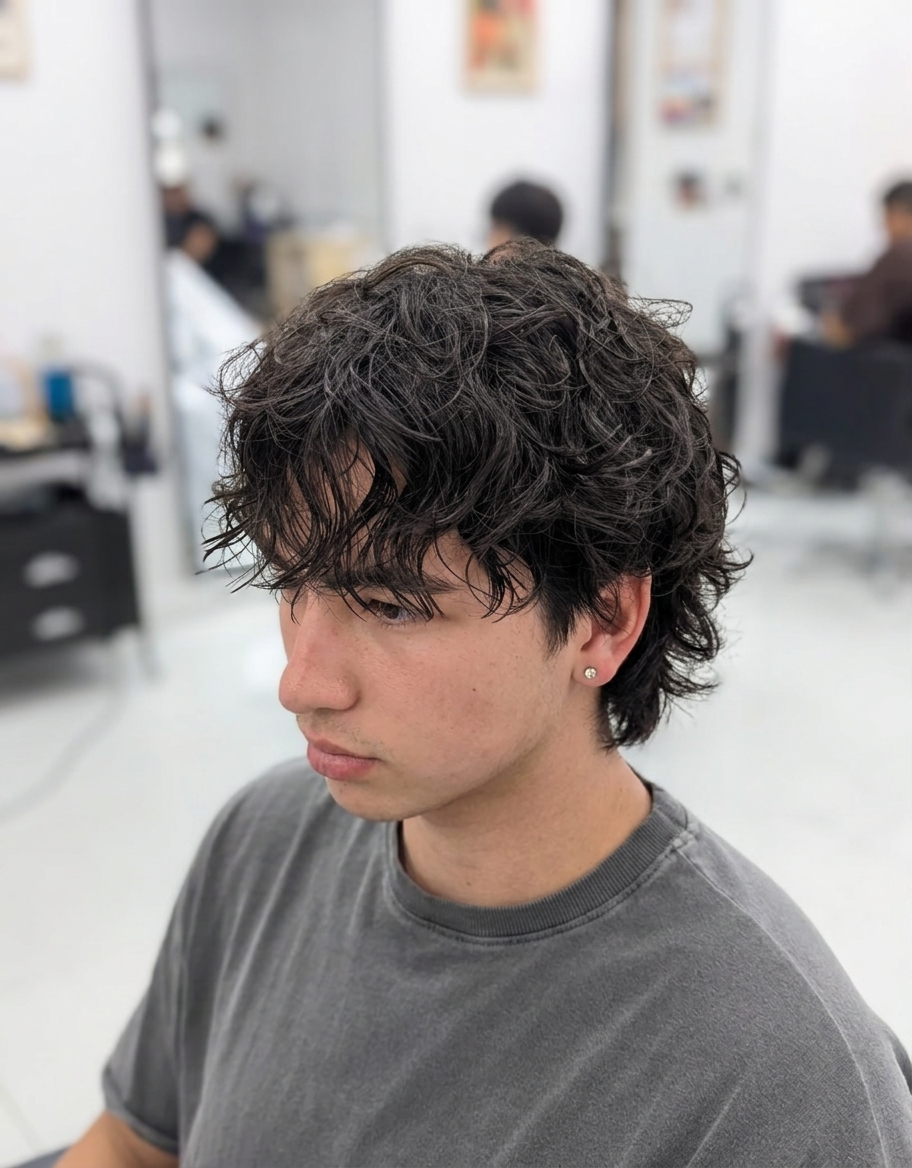
The forward fringe in this photo
In the second photo, separated wavy strands fall across the forehead. The top has a fuller, rounded outline, with visible movement through the crown and a longer section at the nape. More of the forehead is covered than in the first example.
A useful request is: "I like this forward direction and the separated pieces at the front. I want to discuss how much forehead coverage will work with my hair." The photo shows a finished texture, but it does not establish whether that movement comes from natural texture, a chemical service, styling, or a combination. Ask about the steps your own hair would need.
Compare more than the fringe
Keep the front direction separate from the rest of your haircut request. A middle part does not specify how short the sides should be, and a forward fringe does not automatically mean a fade. Neither reference here shows shaved sides.
Before your appointment, choose the details you want to preserve: how much of the forehead stays visible, whether the hair covers the ears, and where the back should finish. It is fine to like the front of one reference and the back of another. Say which feature you mean so the photos do not give conflicting instructions.
Talk about your everyday finish
Bring up your normal routine as well as the photo. Do you usually let your hair dry on its own, or do you use a dryer? Do you want pieces to fall forward, or do you prefer to move them away from your eyes? Your stylist can discuss the cut and styling steps with those habits in mind.
A photo is a starting point for that conversation, not a promise of an identical result. Hair density, existing length, growth direction, and texture all affect the finish. Choosing the front shape first makes it easier to explain what you like and what you do not want changed.
Bring the details you want to keep
Save the reference that matches your preferred front shape. At your appointment, point out the forehead coverage, side length, and back outline you want to keep. Explore appointments with B SIDE U in Pasadena or San Gabriel using the links below.