What to Check in the Back Mirror Before You Leave the Salon
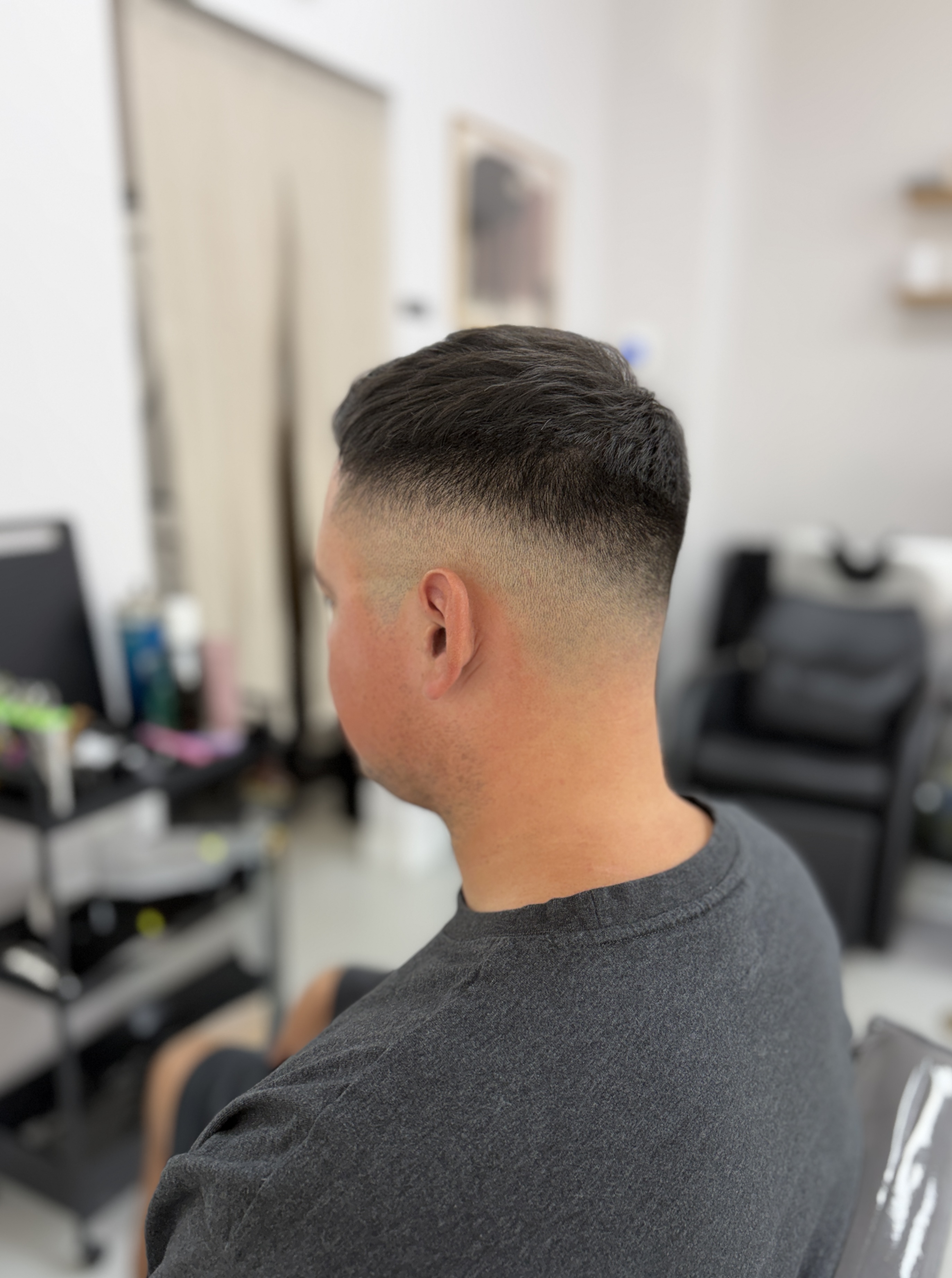
The front mirror is familiar. The back view can take a moment to understand, especially when you have changed how short the sides or neckline are. Before leaving the chair, take a few seconds to look at the haircut as a whole, then point out any detail you want to discuss.
1. Start with your head in a natural position
You do not need to know every haircut term. A clear observation such as “I expected more coverage here” is a useful starting point.
Ask to see the back and both sides while sitting comfortably. A tilted head, a close camera angle, or uneven lighting can make a detail harder to judge. If something looks different, ask to see it from another angle before deciding what it means.
Use the front view as context, too. The goal is to understand how the sides, top, and back work together, rather than judging one small patch in isolation.
2. Look at how much skin is visible
In the work pictured here, the lower sides and nape are cut close, with darker hair remaining above. That contrast is a specific choice, not a requirement for every short haircut.
Ask yourself whether the lower section looks as close as you expected. If you wanted more coverage, say so. Hair that has already been cut cannot be put back, but a clear discussion helps you understand the current result and plan the next appointment.
3. Follow the shape from behind the ear to the crown
Notice where the close section meets the fuller hair above it. Do you like the amount of fullness at the back? Does the silhouette match the part of your reference that mattered to you?
Hair growth patterns and the shape of your head affect what you see. Rather than asking for every side to look identical in a still photo, point to the specific area you want your stylist to explain. One angle alone cannot establish whether a haircut is uneven.
4. Check the outline you agreed on
Look around the ears and along the neckline. If you discussed a soft outline or a more defined finish, this is the moment to compare that request with the result.
A useful question is, “Can you show me how you finished this edge?” It keeps the conversation focused on the detail you are looking at, without needing to choose a technical label.
5. Be specific about anything you would change
Try “This area feels fuller than I expected” or “I would like more coverage here next time.” Ask whether a change is possible before requesting more length to be removed.
If you like the result, ask for a back-view photo on your own phone. It can become a helpful reference at a future visit, especially when paired with a note about what you liked. A single picture does not record every cutting detail, but it gives you a shared visual starting point.
A final mirror check is simply a conversation. You can ask a question, clarify what you are seeing, and leave with a better understanding of your haircut.